
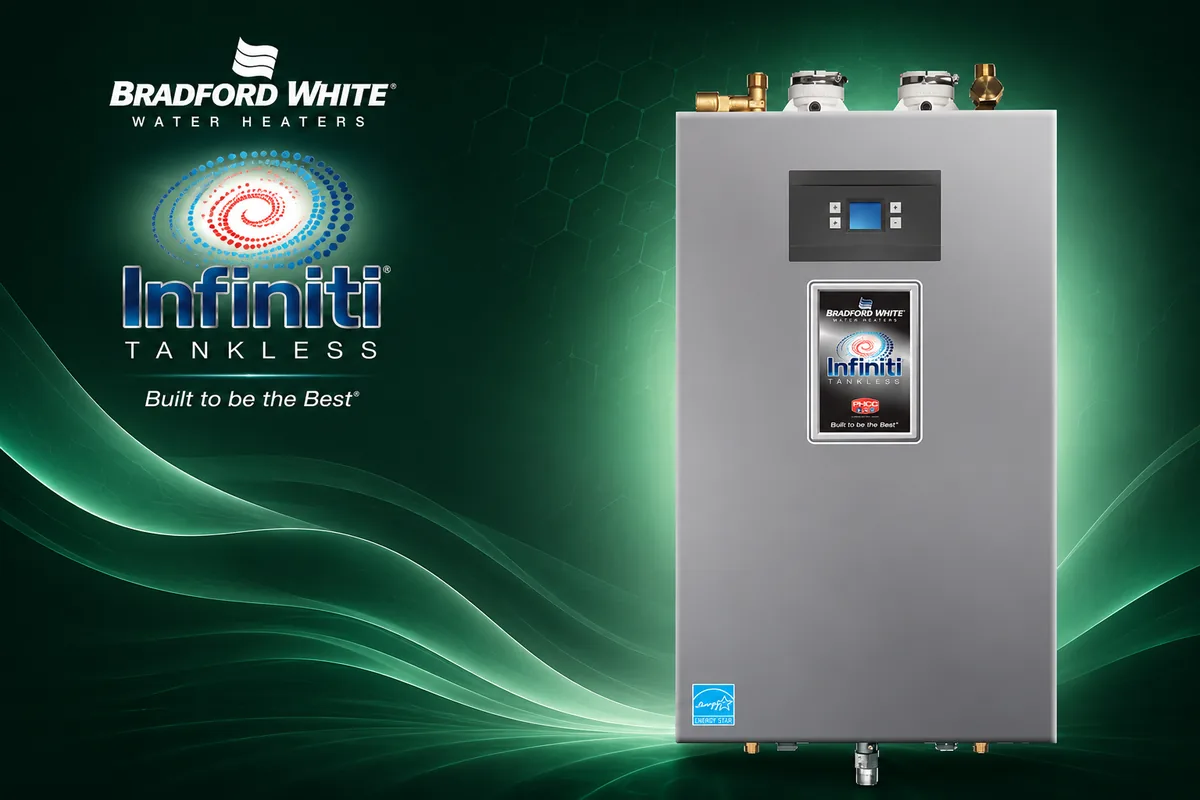
How a Tankless Heater Actually Works
A traditional water heater holds 30–80 gallons of hot water in an insulated tank, kept hot 24/7 even when you're not using it. A tankless unit skips the tank entirely. When you open a hot tap, cold water flows through a high-BTU heat exchanger inside the unit and comes out the other end hot — on demand, with no storage.
The result: endless hot water (within the unit's flow rate), no standby energy loss, and no tank sitting in your basement waiting to leak in ten years.
The Real Numbers for Kalamazoo Homes
Energy use: A tank water heater spends roughly 25–35% of its energy just keeping the stored water hot. A tankless heats only when you ask. For a typical Kalamazoo household, that translates to about $140–$220 less per year on your Consumers Energy bill — bigger savings if you have a gas tank now and switch to a high-efficiency tankless gas unit.
Lifespan: Quality tank heaters last 8–12 years. A well-maintained tankless will run 20+ years. So even though tankless costs more up-front, you're not replacing it as often.
Install cost: A standard 50-gallon tank replacement in the Kalamazoo area runs $1,600–$2,600 installed. A tankless replacement typically runs $3,400–$4,800 installed, depending on whether the gas supply needs upsizing and where the unit gets mounted.
Payback period: Most Kalamazoo homeowners hit break-even at year 7–10 on energy savings alone. After that it's pure win, plus you get endless hot water the whole time.
Where Tankless Falls Short
Cold-water sandwich: If you turn the shower off briefly while soaping up, the burner shuts down. The slug of cool water already in the line hits you when you turn it back on. Some homes notice this more than others — it's worse with long pipe runs to the bathroom. The fix is a dedicated recirculating line that works directly with the tankless unit to keep hot water primed at your fixtures — you get hot water at the tap much faster and largely eliminate the cold-water sandwich.
Flow rate limits: A tankless heater is rated for a maximum gallons-per-minute (GPM) — and that rating drops as the incoming water gets colder. Kalamazoo's groundwater can hit 45°F in February. That means a unit rated 9.0 GPM at 70°F rise might only deliver 5 GPM mid-winter. If two showers and a dishwasher run at once, you'll feel it.
Gas line sizing: Tankless units pull 150,000–200,000 BTU when firing — vastly more than a tank heater. Most existing 1/2" gas supplies don't have the capacity. Plan for $300–$800 in gas line upsizing on a typical retrofit.
Hard water scale: Kalamazoo's water averages 14–22 grains per gallon of hardness. Scale builds up inside the tankless heat exchanger faster than inside a tank, and a scaled-up tankless loses efficiency and eventually fails. Annual descaling is mandatory — or pair it with a whole-home water softener (which we'd recommend regardless).
Who Tankless Makes Sense For
- Families of 4+ who consistently run out of hot water with their existing tank
- Homeowners with large soaking tubs that would drain a standard tank before the tub is even full — a tankless delivers a continuous supply of hot water
- Homeowners planning to stay 8+ years (longer payback)
- Tight basement space — tankless wall-mounts save 4+ sq ft of floor
- Anyone whose current water heater is in a finished space where a tank leak would mean a disaster
- People who already have, or plan to install, a water softener
Who Should Stick With a Tank
- Empty-nesters or single-occupant homes — your tank's already oversized for your needs
- Anyone planning to move within 5 years
- Houses on hard well water without softening
- Budget-tight replacements where the immediate need is hot water back ASAP
Brands We Install in Kalamazoo
We install Bradford White, Rinnai, and Navien tankless heaters as our primary brands — all have strong dealer networks in Michigan, excellent warranties, and parts availability when service is needed. Their condensing models are Energy Star certified, which can qualify for utility rebate programs when available.
We do not install bargain-brand tankless heaters from Amazon or big-box stores. The savings aren't worth the warranty, service, and reliability gap.
Frequently Asked Questions
How long does a tankless water heater install take?
Most retrofit tankless installs take a full day. We have to remove the old tank, run new venting (typically through the sidewall for condensing units), upsize the gas line if needed, and install the new unit, condensate drain, and isolation valves for future descaling.
Will I get rebates for going tankless?
Rebate programs change often, so we recommend checking with your utility provider for the rebates currently available on high-efficiency tankless water heaters. Some federal energy tax credits may also apply — talk to your tax preparer. We're happy to provide the model and efficiency details you'll need to apply.
How often does a tankless need maintenance?
Annual descaling is the main maintenance — we flush the heat exchanger with a vinegar solution to remove scale buildup. Takes about 90 minutes and runs around $250. Critical for hard-water areas like Kalamazoo.
Can I install a tankless myself?
Legally, no — gas appliance and water heater installation in Michigan requires a licensed plumber, permitted, and inspected. Plus the gas-line sizing, venting, and condensate work are easy to get wrong in dangerous ways.
Have a question about this topic? Call Alliance Plumbing at (269) 615-7375 or send us a message — we're happy to talk through your specific situation, even if it doesn't turn into a service call.